Perth, AU

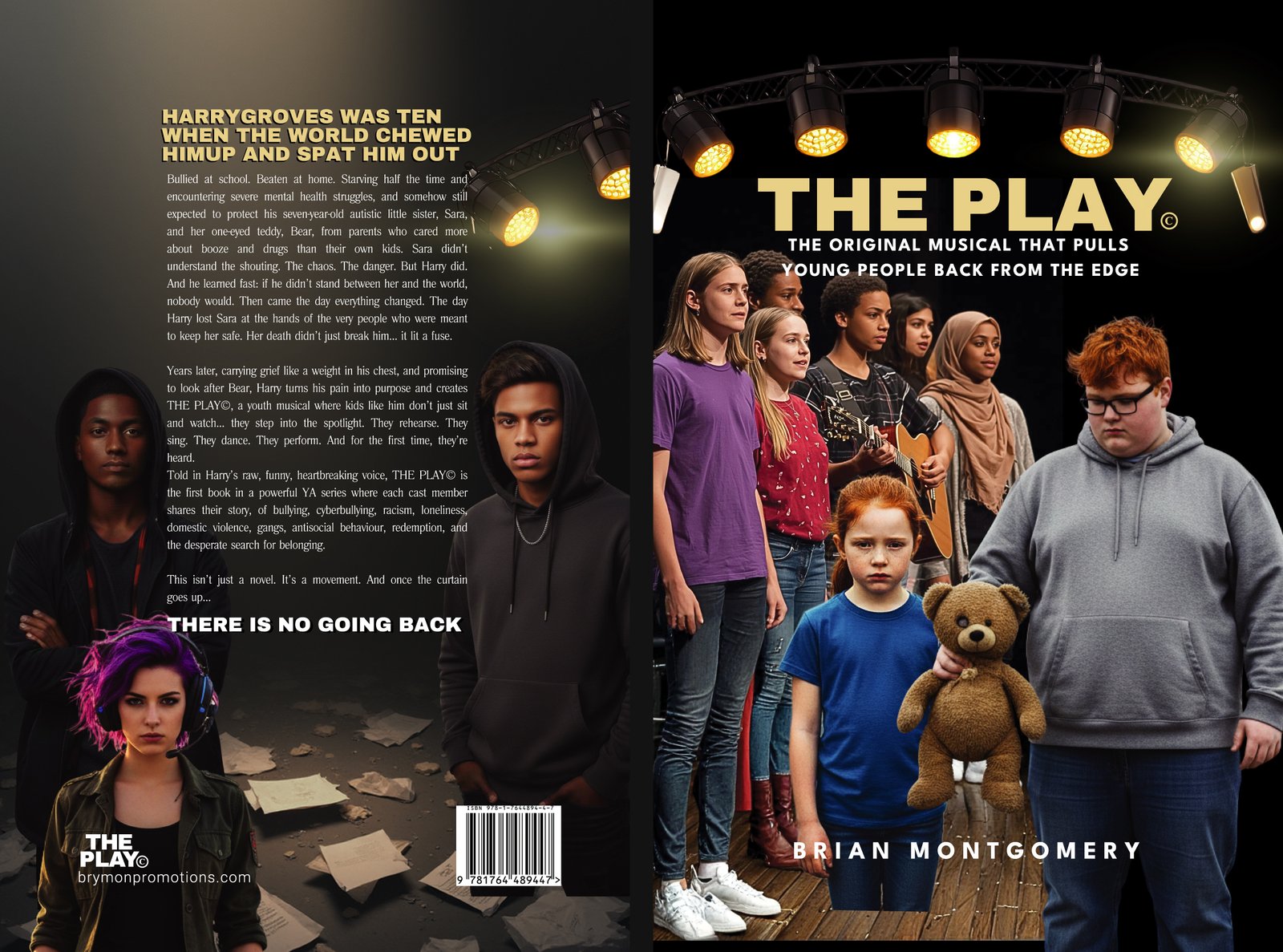
The Play © is a bold and deeply moving theatrical production that weaves together the lives of diverse young individuals, each battling their own personal struggles in an unforgiving world. At its heart is Harry Groves, a 14-year-old boy scarred by the trauma and abuse inflicted by his parents, trapped in a cycle of addiction and violence. Yet, against all odds, Harry embarks on an unexpected journey of healing, driven by the power of creativity, the strength of community, and his own remarkable resilience. This gripping narrative is both heart-wrenching and uplifting, showcasing the indomitable human spirit.
Harry, now living with his supportive grandmother, Mildred, after the devastating loss of his autistic sister and the imprisonment of his parents, faces relentless bullying at school due to his quiet nature, glasses, and weight. Yet, despite his hardships, Harry’s sharp mind and love for the arts become his refuge. He decides to channel his pain into something positive: a school musical, The Play, which unexpectedly transforms not just his life but the lives of everyone involved.
As Harry begins to gather an unlikely group of participants, each character brings their own set of challenges and experiences. Carla, a spirited 14-year-old Indigenous girl with a spinal injury, finds solace in singing and dancing despite the cruel teasing from her peers. Johnny, a transgender teen, grapples with the daily pressures of misgendering and social exclusion but finds acceptance in the welcoming arms of the drama group. Claire, a rebellious bully, begins a journey of redemption as she acknowledges the harm she’s caused and seeks to make amends.
The play also brings together Meena, a Pakistani girl facing racial prejudice, and Stacey, an openly lesbian teen who struggles with homophobia and loneliness. Oliver, a shy boy who hides behind his passion for drawing fantasy maps, finds his self-esteem shattered by bullying. At the same time, Jessica, a student with dyslexia, battles feelings of inadequacy and academic pressure. For each of them, The Play becomes a space of healing and self-expression, allowing them to find the confidence and acceptance they had long been deprived of.
As the rehearsals progress, The Play becomes much more than a school production—it becomes a lifeline. It offers the characters a sense of belonging, friendship, and hope as they face and overcome the complexities of bullying, prejudice, and personal trauma. Mildred, Harry’s grandmother, brings her expertise in dance and music to the project, guiding the group with her wisdom and support and rekindling her bond with Harry.
Among the participants are also former bullies, like Liam and Mathew, who initially terrorised their classmates but are now seeking redemption through the musical. They begin to shed their tough exteriors and join the others on a path of self-discovery and growth. Even Sam, the calculating and manipulative leader of a small gang, begins to question her toxic ways and seeks a way out of the cycle of control and cruelty that she’s built around herself.
The Play © ultimately becomes a celebration of resilience, diversity, and the healing power of community. Through laughter, music, and connection, these young individuals find their voices, their confidence, and most importantly, the realisation that their pasts do not define them. Instead, they are strengthened by their ability to rise above hardships and stand together in solidarity, showing that even in a world filled with challenges, hope, friendship, and creativity can light the way forward.
The Play: Harrys Story By Brian Montgomery
The Play: Harrys Story by Brian Montgomery follows Harry Groves from a brutal childhood in a violent, neglectful home through years of bullying at school and then into the creation of The Play, a grassroots musical project that turns his pain, and the pain of his friends, into something hopeful and loud. The book moves from Harrys life with his little sister Sara, through her death at the hands of their parents, into foster care, healing, and eventually a youth-led performance movement that tackles bullying, racism, homophobia, transphobia and mental health head on, both on stage and in real life. It starts in a damp social housing unit and ends on the road with a touring show and an epilogue that stresses survival, persistence, and responsibility to the next generation.
Reading it, I felt like I was being dragged into a storm right alongside Harry. The early chapters are very emotional. The scenes of abuse at home and the cruelty at school are not softened. They feel raw and, at times, hard to look at. I found myself angry at the adults who look away, and at the same time very protective of Harry and Sara. The moment when Sara dies, and Harry learns what happened in that small office at school, left my stomach in knots. The writing there is simple, direct, and emotional, and that choice makes it land even more. Later, when Harry begins to write for Sara and then turns that grief into a musical project, I felt a real lift. The book does not pretend that art magically fixes everything. It shows a long, messy grind full of small wins and big setbacks, which made Harrys eventual success feel earned rather than easy.
I also connected with the way the book treats the wider cast and the bigger ideas. The bullying in this story is not one-note. It covers racism, religious abuse, queerphobia, class, disability, and online cruelty, and it lets those kids have voices, songs, and arcs instead of keeping them as background. Chapters like Bullies Not Welcome Here, Redemption, and The Reformed Trio shift the lens and allow room for change and accountability, even for characters like Mathew Jones and Liam Harris, who start as almost pure villains. That choice won me over. It shows how harm comes from systems and pain, not only from bad kids. I liked the mix of prose, bits of lyrics, and the behind-the-scenes feel of building a show. Sometimes the narration tells me what to feel instead of trusting the scene, but the honesty behind it comes through so strongly that I was willing to go with it.
By the time I reached the epilogue, with Harry looking back on the funding fights, the rejections, and the moment he turns down a big film deal to protect the heart of The Play, I felt proud of him. The project has grown into something bigger than one boys story. It becomes a touring movement that belongs to every young person who steps on stage or sits in the audience and finally feels seen. That final note of still standing feels earned.
Teens and adults looking for a frank, heartfelt story about abuse, bullying, grief, and recovery who can handle heavy themes. An invaluable read for youth workers, teachers, and parents trying to understand what kids live through, as well as young readers who feel invisible and need to see that their stories matter.
Youth Mental Health, Cyberbullying, Gang Pressure, and Knife Culture.
From Aisha and Mustapha facing discrimination, to Johnny fighting for identity.
Knives get dropped not out of fear, but because they've found something better.
No memberships added yet.