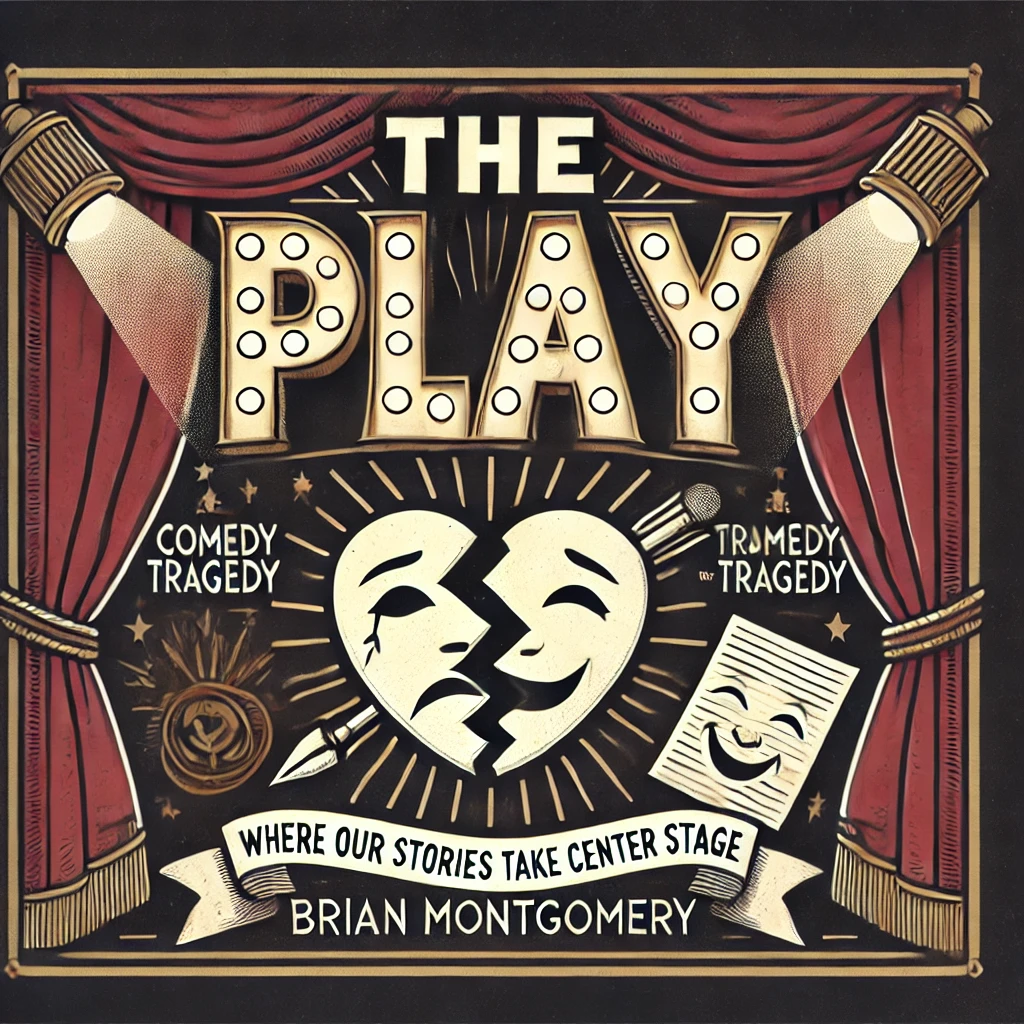
The Play: Harry’s Story by Brian Montgomery follows Harry Groves from a brutal childhood in a violent, neglectful home through years of bullying at school and then into the creation of “The Play”, a grassroots musical project that turns his pain, and the pain of his friends, into something hopeful and loud. The book moves from Harry’s life with his little sister Sara, through her death at the hands of their parents, into foster care, healing, and eventually a youth-led performance movement that tackles bullying, racism, homophobia, transphobia and mental health head on, both on stage and in real life. It starts in a damp social housing unit and ends on the road with a touring show and an epilogue that stresses survival, persistence, and responsibility to the next generation.
Reading it, I felt like I was being dragged into a storm right alongside Harry. The early chapters are very emotional. The scenes of abuse at home and the cruelty at school are not softened. They feel raw and, at times, hard to look at. I found myself angry at the adults who look away, and at the same time very protective of Harry and Sara. The moment when Sara dies, and Harry learns what happened in that small office at school, left my stomach in knots. The writing there is simple, direct, and emotional, and that choice makes it land even more. Later, when Harry begins to write “for Sara” and then turns that grief into a musical project, I felt a real lift. The book does not pretend that art magically fixes everything. It shows a long, messy grind full of small wins and big setbacks, which made Harry’s eventual success feel earned rather than easy.
I also connected with the way the book treats the wider cast and the bigger ideas. The bullying in this story is not one-note. It covers racism, religious abuse, queerphobia, class, disability, and online cruelty, and it lets those kids have voices, songs, and arcs instead of keeping them as background. Chapters like “Bullies Not Welcome Here,” “Redemption”, and “The Reformed Trio” shift the lens and allow room for change and accountability, even for characters like Mathew Jones and Liam Harris, who start as almost pure villains. That choice won me over. It shows how harm comes from systems and pain, not only from “bad kids”. I liked the mix of prose, bits of lyrics, and the behind-the-scenes feel of building a show. Sometimes the narration tells me what to feel instead of trusting the scene, but the honesty behind it comes through so strongly that I was willing to go with it.
By the time I reached the epilogue, with Harry looking back on the funding fights, the rejections, and the moment he turns down a big film deal to protect the “heart” of The Play, I felt proud of him. The project has grown into something bigger than one boy’s story. It becomes a touring movement that belongs to every young person who steps on stage or sits in the audience and finally feels seen. That final note of “still standing” feels earned.
I would recommend The Play: Harry’s Story to teens and adults who want a frank and heartfelt story about abuse, bullying, grief, and recovery, and who can handle some very heavy scenes along the way. It’s a good fit for youth workers, teachers, and parents who want to understand what some kids are living through, and for young readers who feel invisible or silenced and need to see that their stories matter and can be turned into something powerful and public. If you are ready for a story that hurts, then reaches for hope and community and the power of performance, this book is worth your time.
Sixteen-year-old Harry Groves didn’t grow up — he endured.
After losing his autistic sister, Sara, to the very people who were meant to protect them, Harry is left carrying more than grief. He’s carrying rage, shame, and the kind of silence that eats you alive. Years of neglect, chaos, and relentless bullying have taught him one rule:
don’t trust anyone. The only thing he’s got left of Sara is Bear — her battered, one-eyed teddy, small enough to hide, but heavy enough to break him every time he touches it.
Then Harry ends up with the one person who refuses to look at him like he’s already ruined:
Nan Mildred — a retired theatre performer with a sharp tongue, a fierce heart, and a faith strong enough to drag him back from the edge, whether he likes it or not
Living with Nan is different. Her tiny unit isn’t just a home… It’s a rehearsal room, a safe space, and the first place Harry’s ever felt like he can breathe without flinching. Nan teaches him how to stand up again — not perfectly, but bravely — and for the first time, Harry starts to believe his voice might actually matter.
Then Nan pushes him to do something bigger than just “get through school” …
He creates THE PLAY© — a student musical based on the real struggles teenagers live with every day. Not the watered-down version. The real version. The kind people avoid talking about until it’s too late.
The cast isn’t random. They’re the world Harry sees around him:
What starts as a school project turns into something much bigger and powerful: a place where young people finally face the stuff tearing their lives apart — Youth Mental Health Struggles, Bullying And Cyberbullying, Antisocial Behaviour, Harmful Peer Influence, Exploitation Awareness, Gang Pressure And Knife Culture, Underage Drinking And Vaping, Truancy, Disrespect For Authority, And The Desperate Need For Identity And Belonging.
Because rehearsals don’t just build a show — they build people.
The loud ones calm down. The quiet ones step forward.
And the kids on the edge of gangs and violence start turning up for something different.
Then it happens.
Knives get dropped. Not out of fear — but because they’ve found something better: a place to belong, and a reason to change.
 Youth mental health.
 Knife culture.
 Gang pressure.
 Redemption.
 Every sale supports THE PLAY© Musical shows.
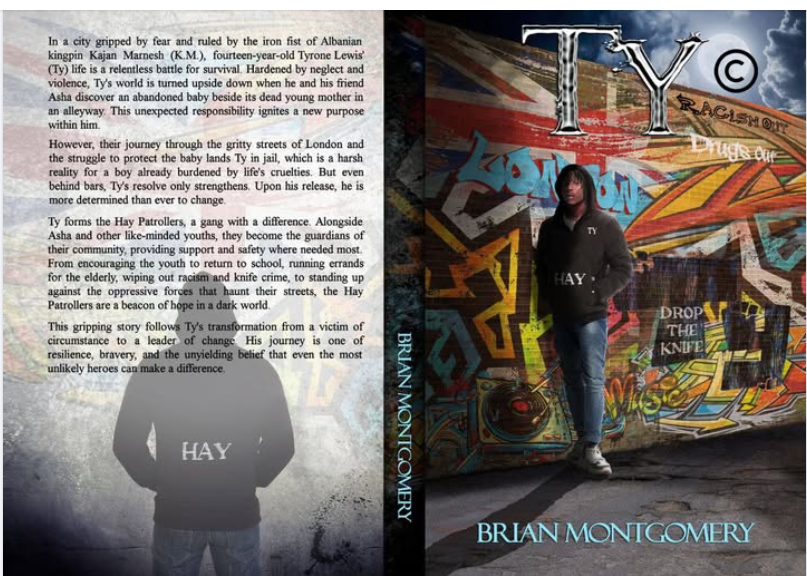
Based on a successful real-life youth crime prevention program in Perth, Australia, created by the author, “Ty” is a book and a three-part TV drama that tells the fictional story of Tyrone Lewis, a resilient fourteen-year-old tough London Street kid. Born in jail to his fifteen-year-old addicted mother, Ty’s life has been marred by physical abuse, neglect, drug dealing, racism, mental health struggles, youth gangs, and the rising tide of knife crime.
Amidst the turmoil, Ty befriends a runaway pregnant teen abused by her brother. This unlikely friendship leads him into deeper trouble, culminating in his incarceration on various charges, including kidnapping a newborn baby found beside its dead mother in an alleyway.
Confronted with the harsh realities of the justice system, Ty’s sense of injustice— compounded by his experiences of racism and unfair treatment—fuels his resolve to fight back.
While in prison, Ty climbs the ranks to become a top dog, forming an unexpected bond with Spencer, a bullied transgender inmate who teaches him to read and write. Together, they create an unlikely alliance of misfits dedicated to eliminating makeshift weapons and drugs from within the prison and supporting other inmates with their mental health struggles. Ty’s ultimate mission is to reduce youth re-offending, promote safety, and eradicate the pervasive issues of knife crime, youth gangs, antisocial behaviour, racism, and homophobia.
Additionally, they aim to extend help to the elderly and disabled who feel like prisoners in their own homes.
However, standing in their way is a notorious Albanian drug kingpin who controls the drugs, human trafficking, and most of the youth gangs in London. The government’s special forces, led by Clive, enlist Ty and his crew to help take down this formidable adversary in exchange for special favours. Initially hesitant, Ty realises he has no choice but to accept the deal.
Upon their early release, Ty and his crew continue their excellent work outside prison, becoming local heroes known as the “HAY Patrollers” (Harmony Amongst Youth). They patrol shopping centres and other public spaces, significantly reducing youth crime while creating employment and training opportunities for multicultural street kids. Their efforts
aim to change young people’s behaviours and make communities safer places to live. However, Ty knows he cannot escape the deal he made with Clive.
“Ty” is a powerful narrative of struggle, redemption, and the fight for justice. It illustrates how even those from the most disadvantaged backgrounds can rise above their circumstances, transcending the cycle of violence to make a positive change for themselves, their community, and the future.
Copyright © 2024 The Play Muscial, All rights reserved. Powered By Armeena Baloch